




 On eBay Now...
Rare ARTHUR ROTHSTEIN 1937 Erosion Photo FSA Jackson County ALABAMA DUST BOWL For Sale
When you click on links to various merchants on this site and make a purchase, this can result in this site earning a commission. Affiliate programs and affiliations include, but are not limited to, the eBay Partner Network.

Rare ARTHUR ROTHSTEIN 1937 Erosion Photo FSA Jackson County ALABAMA DUST BOWL:
$2500.00
Item TranscriptionThe back of the 8x10 inch photograph contains several stamped, handwritten, and printed notations:
Stamp 1 (Top Left): PLEASE CREDIT F. S. A. FARM SECURITY ADMINISTRATION PHOTO BY: ROTHSTEIN
Stamp 2 (Top Right, Rotated): PLEASE NOTE: Kindly Return Unused Photos to the Division of Information, Farm Security Administration, Washington, D. C.
Stamp 3 (Bottom Center): PLEASE CREDIT F. S. A. FARM SECURITY ADMINISTRATION PHOTO BY: ROTHSTEIN
Stamp 4 (Blue Ink, Right Side): REF. DEPT. N. E. A. 3-8 40
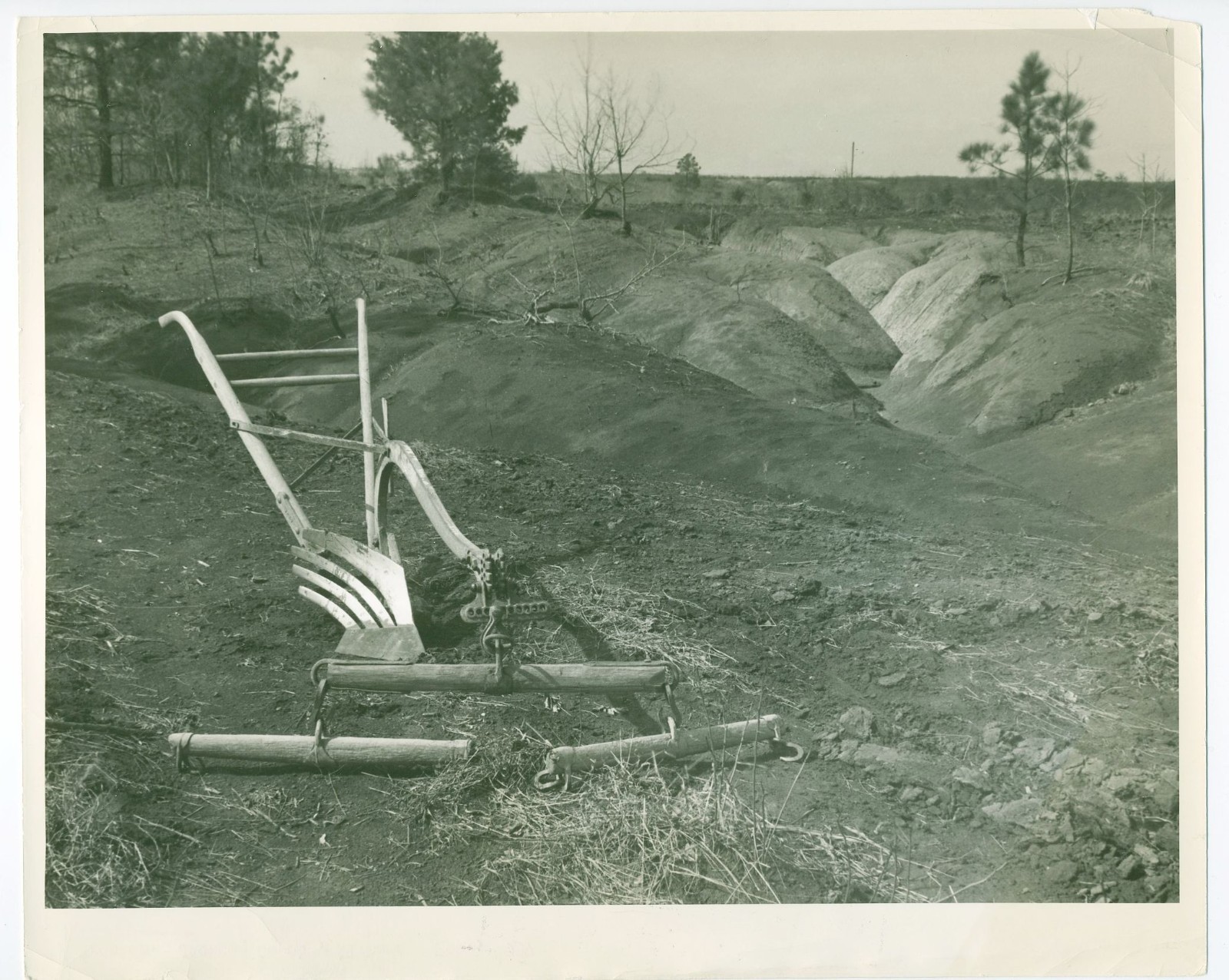
Handwritten Note (Bottom): Erosion. Jackson County, Alabama Feb., 1937
Handwritten Numbers: 25438 D and A602
Photographer: Taken by renowned documentary photographer Arthur Rothstein, who famously documented American life and the effects of the Great Depression for the Farm Security Administration (FSA) / Office of War Information (OWI) collection.
Date & Location: Captured in Jackson County, Alabama, in February 1937.
Historical Significance: The front image depicts an abandoned or unused plow sitting on severely eroded land, capturing the devastating environmental and agricultural challenges faced by rural southern farmers during the New Deal era. Vintage FSA press and archive prints like this are highly sought-after collector's items for photography and history enthusiasts.
Vintage Original FSA Photograph - Arthur Rothstein - Jackson County, Alabama (1937)Product Description:Up for sale is an authentic, historical vintage press/archive photograph taken by renowned Farm Security Administration (FSA) photographer Arthur Rothstein in February 1937. The image depicts a classic agricultural plow resting amidst severely eroded topography in Jackson County, Alabama, encapsulating the harsh realities of rural American farming during the Great Depression.The reverse side features original period stamps ("PLEASE CREDIT F.S.A. PHOTO BY: ROTHSTEIN"), archival notes, and routing markings, confirming its authenticity as a vintage government/press-related print.Key Features & Keywords for Search:* Photographer: Arthur Rothstein* Agency: Farm Security Administration (FSA)* Date: February 1937* Location: Jackson County, Alabama* Subject: Soil Erosion, Great Depression History, Vintage Agriculture, Americana* Condition: Vintage Original Print with authentic back stamps and handling wear consistent with historical archive materials.Add this rare piece of American documentary history to your collection today! Ships of Arthur Rothstein (1915–1985)Chapter 1: Early Life and Education in New York
Arthur Rothstein was born on July 17, 1915, in Manhattan, New York City, to a family of Jewish immigrants, and was raised primarily in the Bronx. Growing up during the interwar period, Rothstein developed an early fascination with visual arts and technology.
He enrolled at Columbia University, where his academic career coincided with the onset of the Great Depression. While at Columbia, Rothstein cemented his passion for photography:
He founded the University Camera Club.
He served as the photography editor for the undergraduate yearbook, The Columbian.
He studied alongside future prominent artists and intellectuals, including abstract painter Ad Reinhardt.
It was at Columbia that Rothstein met economics instructor Roy Stryker, a relationship that would alter the trajectory of American documentary photography. As a college senior in 1935, Rothstein assisted Stryker by preparing copy photographs for an envisioned picture source book on American agriculture. Though that specific volume was never published, the partnership laid the groundwork for a monumental professional collaboration.
Chapter 2: The Farm Security Administration (FSA) YearsFollowing his graduation from Columbia in 1935, Rothstein was recruited by Roy Stryker to become the very first staff photographer for the newly established Resettlement Administration—soon to be reorganized as the Farm Security Administration (FSA).
Stryker headed the agency's historical section, assembling a legendary team of documentary photographers (including Dorothea Lange, Walker Evans, Gordon Parks, and Ben Shahn) tasked with recording the economic distress of rural America and the impact of New Deal relief programs. Over a five-year tenure from 1935 to 1940, Rothstein traveled thousands of miles across the United States, shooting approximately 80,000 negatives that captured the nation's social landscape.
Chapter 3: Iconic Works and Historical DocumentationRothstein’s assignments for the FSA produced some of the most enduring visual icons of 20th-century American history:
The Dust Bowl (1936): Sent out into the drought-stricken plains of the American Midwest, Rothstein captured stark realities in Cimarron County, Oklahoma. His most famous image from this period depicts a farmer bending into a fierce dust storm alongside his two young sons. The stark composition visually defined the environmental catastrophe of the Dust Bowl.
The Badlands Steer Skull (1936): While shooting in the South Dakota Badlands, Rothstein photographed a sun-bleached steer skull on cracked, parched earth. Though it became an immortal symbol of the drought, it later became the center of a brief political controversy when critics questioned the placement of the skull.
Southern Communities and Alabama (1937): Rothstein documented rural living conditions, tenant farming, and steel industries across the South. His documentation in locations such as Jackson County, Alabama, recorded crucial transitions in rural infrastructure, agricultural methods, and land erosion during the New Deal era.
As global conflict erupted, Rothstein’s career shifted from domestic documentation to international photojournalism:
Office of War Information (OWI): After leaving the FSA in 1940, Rothstein briefly worked for Look magazine before joining the OWI and subsequently entering the U.S. Army.
Signal Corps Service: Serving in the U.S. Army Signal Corps, Rothstein documented military operations in the China-Burma-India theater. Following his discharge in 1945, he remained in China as chief photographer for the United Nations Relief and Rehabilitation Administration (UNRRA), recording post-war recovery and the humanitarian toll of the era.
In 1947, Rothstein returned to civilian media, rejoining Look magazine as a staff photographer. He ultimately rose to become the Director of Photography at Look, guiding its visual narrative through the post-war decades until the magazine ceased publication in 1971.
Following the closure of Look, Rothstein transitioned to Parade magazine in 1972, where he served as photography director until the end of his life. In addition to his editorial work, he contributed regular columns to publications like US Camera, Modern Photography, and the New York Times, while authoring nine instructional and historical books on photography. He also invented the innovative X-O-Graph printing process.
Chapter 6: Mentorship, Legacy, and HonorsBeyond his published imagery, Rothstein dedicated much of his later life to education. He held faculty positions at Mercy College and the Parsons School of Design in New York City. As an influential mentor, he helped shape the early careers of numerous notable visual artists and filmmakers, including Stanley Kubrick, Douglas Kirkland, and Chester Higgins, Jr.
Arthur Rothstein died on November 11, 1985, at the age of 70. His photographs are preserved in permanent collections worldwide, including the Smithsonian Institution, the Museum of Modern Art (MoMA), and the International Museum of Photography at George Eastman House. He is remembered as a pioneer of American photojournalism whose lens provided an honest, empathetic window into the human condition during times of profound national crisis.
Arthur Rothstein (July 17, 1915 – November 11, 1985) was an American photographer. His career spanned five decades, and he received recognition as one of America's premier photojournalists.Life and careerThe son of Jewish immigrants,[1] Rothstein was born in Manhattan, New York City, and he grew up in the Bronx. He was a 1935 graduate of Columbia University,[2] where he was a founder of the University Camera Club and photography editor of The Columbian, the undergraduate yearbook.[3] He was a classmate of abstract painter Ad Reinhardt.[2] Following his graduation from Columbia during the Great Depression, Rothstein was invited to Washington DC by one of his professors at Columbia, Roy Stryker. Rothstein had been Stryker's student at Columbia University in the early 1930s.[4]In 1935, as a college senior, Rothstein prepared a set of copy photographs for a picture source book on American agriculture that Stryker and another professor, Rexford Tugwell were assembling. The book was never published, but before the year was out, Tugwell, who had left Columbia to be part of FDR's New Deal brain trust, hired Stryker. Stryker hired Rothstein to set up the darkroom for Stryker's Photo Unit of the Historical Section of the Resettlement Administration (RA).Rothstein's Resettlement Administration photograph Farmer and Sons Walking in the Face of a Dust Storm, an iconic image of the Dust Bowl taken in Cimarron County, Oklahoma, in April 1936[5]Arthur Rothstein became the first photographer sent out by Roy Stryker, the head of the Photo Unit. During the next five years he shot photographs of rural America. He and other FSA photographers, including Esther Bubley, Marjory Collins, Marion Post Wolcott, Walker Evans, Russell Lee, Gordon Parks, Jack Delano, John Vachon, Carl Mydans, Dorothea Lange and Ben Shahn, were employed to document the living conditions of the rural poor in the United States. The Resettlement Administration became the Farm Security Administration (FSA) in 1937. Later, when the country geared up for World War II, the FSA became part of the Office of War Information (OWI).The photographs made during Rothstein's five-year stint with the Photo Unit form a catalog of the agency's initiatives. One of his first assignments was to document the lives of some Virginia farmers who were being evicted to make way for the Shenandoah National Park and about to be relocated by the Resettlement Administration, and subsequent trips took him to the Dust Bowl and to cattle ranches in Montana.The immediate incentive for his February 1937 assignment came from the interest generated by congressional consideration of farm tenant legislation sponsored in the Senate by John H. Bankhead II, a Democrat from Alabama with a strong interest in agriculture. Enacted in July, the Bankhead-Jones Farm Tenant Act gave the agency its new lease on life as the Farm Security Administration.Gee's BendOn February 18, 1937, Stryker wrote Rothstein that the journalist Beverly Smith had told him about a tenant community at Gee's Bend, Alabama, and was preparing an article on tenancy for the July issue of The American Magazine, but Stryker sensed bigger possibilities, telling Rothstein, "We could do a swell story; one that Life [magazine] will grab." Stryker planned to visit Alabama and asked Rothstein to wait for him, but he was never able to make the trip, and Rothstein went to Gee's Bend alone.The residents of Gee's Bend symbolized two different things to the Resettlement Administration. On the one hand, reports about the community prepared by the agency describe the residents as isolated and primitive, people whose speech, habits, and material culture reflected an African origin and an older way of life. On the other hand, the agency's agenda for rehabilitation implied a view of the residents as the victims of slavery and the farm-tenant system on a former plantation. The two perceptions may be seen as related: if these tenants — despite their primitive culture— could benefit from training and financial assistance, their success would demonstrate the efficacy of the programs.Unlike the subjects of many Resettlement Administration and Farm Security Administration photographs, the people of Gee's Bend are not portrayed as victims. The photographs do not show the back-breaking work of cultivation and harvest, but only offer a glimpse of spring plowing. At home, the residents do not merely inhabit substandard housing but are engaged in a variety of domestic activities. The dwellings at Gee's Bend must have been as uncomfortable as the frame shacks thrown up for farm workers everywhere, but Rothstein's photographs emphasize the log cabins' picturesque qualities. This affirming image of life in Gee's Bend is reinforced by Rothstein's deliberate, balanced compositions which lend dignity to the people being pictured.There does not seem to have been a Life magazine story about Gee's Bend, but a long article ran in the New York Times Magazine of August 22, 1937. It is illustrated by eleven of Rothstein's pictures, with a text that draws heavily upon a Resettlement Administration report dated in May. The story extols the agency's regional director as intelligent and sympathetic and describes the Gee's Bend project in glowing terms. Reporter John Temple Graves II perceived the project as retaining agrarian—and African—values.Annie Pettway Bendolph carrying water. Gee's Bend, Alabama. April 1937. Photographed by Arthur Rothstein.Annie Pettway Bendolph carrying water. Gee's Bend, Alabama. April 1937. Photographed by Arthur Rothstein. The former home of the Pettways. Gee's Bend, Alabama. April 1937. Photographed by Arthur Rothstein.The former home of the Pettways. Gee's Bend, Alabama. April 1937. Photographed by Arthur Rothstein. Woman on the Pettway PlantationWoman on the Pettway PlantationIn 1940, Rothstein became a staff photographer for Look magazine but left shortly thereafter to join the OWI and then the US Army as a photographer in the Signal Corps. His military assignment took him to the China-Burma-India theatre and he remained in China following his discharge from the military in 1945, working as chief photographer for the United Nations Relief and Rehabilitation Administration, documenting the Great Famine and the plight of displaced survivors of the Holocaust in the Hongkew ghetto of Shanghai.In 1947, Rothstein rejoined Look as Director of Photography. He remained at Look until 1971 when the magazine ceased publication. Rothstein joined Parade magazine in 1972 and remained there until his death.He was the author of numerous magazine articles and a staff columnist for US Camera and Modern Photography magazines and the New York Times, Rothstein wrote and published nine books.Rothstein's photographs are in permanent collections throughout the world and have appeared in numerous exhibitions. A selection of these one-man shows include shows at the International Museum of Photography at George Eastman House; the Smithsonian Institution; Photokina; Corcoran Gallery of Art; Royal Photographic Society, as well as traveling exhibitions for the United States Information Service and for Parade magazine.He was a member of the faculty of the Columbia University Graduate School of Journalism and a Spencer Chair Professor at S. I. Newhouse School of Public Communications, Syracuse University. Rothstein was also on the faculties of Mercy College, and the Parsons School of Design in New York City, and he took great pride in mentoring young photographers including Stanley Kubrick, Douglas Kirkland, and Chester Higgins, Jr.A recipient of more than 35 awards in photojournalism and a former juror for the Pulitzer Prize, Rothstein was also a founder and former officer of the American Society of Magazine Photographers (ASMP). Arthur Rothstein died on November 11, 1985, in New Rochelle, New York.Personal lifeRothstein's parents were Isadore Rothstein and Nettie Rothstein (née Perlstein).[6] In 1947, he married Grace Goodman, and the couple went on to have four children: Robert Rothstein (Rob Stoner), Ann Segan, Eve Roth Lindsay and Daniel Rothstein.[7][8]
Related Items:
*RARE* ARTHUR COURT Aluminum Deer Stag Elk Red Carnelian Eye Gravy Boat VTG
$125.00

Rare Arthur Espenet Carpenter Wooden Block Book Ends Signed MCM Joel Spokane
$375.00

Rare ARTHUR ROTHSTEIN 1937 Erosion Photo FSA Jackson County ALABAMA DUST BOWL
$2500.00