




 On eBay Now...
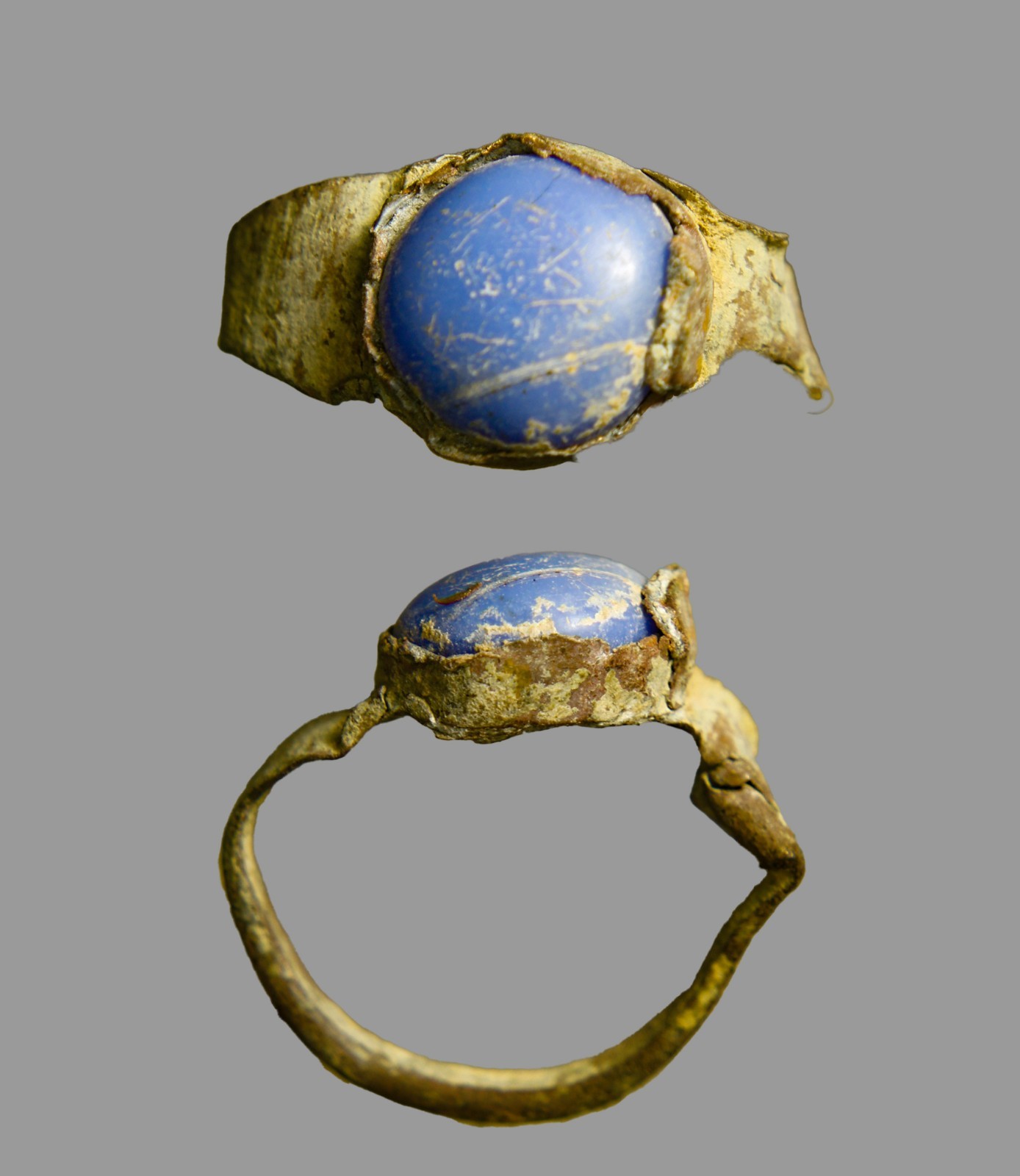
Ancient Roman Bronze Fairuz Blue Cabochon Ring Size 2-2.5 c. 100-400 AD COA For Sale
When you click on links to various merchants on this site and make a purchase, this can result in this site earning a commission. Affiliate programs and affiliations include, but are not limited to, the eBay Partner Network.

Ancient Roman Bronze Fairuz Blue Cabochon Ring Size 2-2.5 c. 100-400 AD COA:
$155.00
Ancient Roman Imperial Cast Bronze Fairuz (Turquoise / Blue Glass Cabochon) Child's Amuletic Ring (US Size 2–2.5 — c. 2nd–4th Century AD)
Authenticity & Guarantee
Certification: Certified Authentic — includes signed Certificate of Authenticity (COA) with full provenance documentation.
Provenance: Ex-private European collection, legally acquired from international sales; Classical Roman / Levantine Sphere.
Item Specifications & Exact Dimensions
Object: Cast Bronze Ring with Inlaid Blue Cabochon Stone / Glass (Fairuz)
Culture / Period: Roman Imperial Era / Levantine Provincial Sphere
Date Range: Circa 2nd Century AD – 4th Century AD (c. 100 – 400 AD)
Ring Size: US Ring Size 2 – 2.5 (Approx. 13.1 mm – 13.5 mm inner diameter)
Material: Cast Bronze (Copper Alloy) with Cobalt-Blue / Turquoise Cabochon Insert
Form & Architecture: Elevated oval box-bezel with a crimped bronze collar holding a high-domed, polished vivid blue cabochon (Fairuz); set upon a delicate, slender bronze wire hoop tapering toward the shoulders
Condition: Fine, 100% complete ancient condition. Intact high-dome cabochon stone firmly held within its original ancient bezel setting, slender hoop intact, preserved under a warm golden-olive bronze patina with authentic light earthen burial deposits. Free of modern restoration or tooling.
Fairuz (Turquoise / Blue Cabochons) & Apotropaic Magic
In the Roman Near East and Levantine provinces, sky-blue stones and glass pastes—traditionally referred to in regional Semitic nomenclature as Fairuz—were prized for their potent apotropaic qualities. Across the ancient Mediterranean, the color blue was believed to deflect the malevolent gaze of the Evil Eye (Invidia), serving as a protective shield to ward off sickness, sudden demonic affliction, and spiritual harm.
Child & Miniature Ring Mechanics (US Size 2–2.5)
Rings measuring US Size 2–2.5 fulfilled specific social and protective roles in ancient Roman society. They were crafted for young children and infants, given as protective talismans during naming ceremonies (Dies Lustricus) or birth rites to protect vulnerable youths into adolescence. Alternatively, adult Roman women wore diminutive rings on upper finger joints (phalanx / knuckle rings) or suspended them from necklaces as intimate personal talismans.
Typological Analysis & Exact Classification
Primary Class: Classical Antiquity Personal Equipment / Roman Amuletic Ring
Sub-Class: Box-Bezel Inlaid Cabochon (Fairuz) Ring Class
Manufacturing Technique: Hammered and cast copper alloy hoop with cold-crimped bezel collar securing a molded cabochon inset.
Comparable Archaeological Examples & Museum Accession Numbers
British Museum (Accession No. 1856,0701.2280): Roman bronze finger ring set with a blue glass/turquoise cabochon.
Metropolitan Museum of Art (Accession No. 74.51.5380): Roman provincial copper alloy child's ring with set glass cabochon.
Israel Museum, Jerusalem: Roman Holy Land bronze child rings set with apotropaic blue stone cabochons.

Ancient Roman / Late Antique Gnostic Protective Pentagram Magic Ring 200AD
$267.33

200 BC Ancient Roman Fight Weapon Gladiator Battle Dagger Museum Grade artifact
$630.00

Ancient Roman Bone dice decorated with circles 1-4th AD Good Very Rare 8mm 1,4g
$200.00